
News
Criminal Justice Major Published in Columbia Undergraduate Law Review

 Connor F. Montferrat (Class of 2013), a Rutgers School of Arts and Sciences student double-majoring in Criminal Justice and Political Science was published in the Columbia Undergraduate Law Review. “Repeal Rule 413 of the Federal Rules of Evidence: The Admissibility of Evidence of Prior Sex Offenses” was a paper Connor originally completed for Dr. Lennox Hinds’ Crimes Against Humanity course. His paper was published in Volume VII, Issue I, Fall 2012 edition of the Columbia Undergraduate Law Review.
The Passing of Dr. Robert Szejner
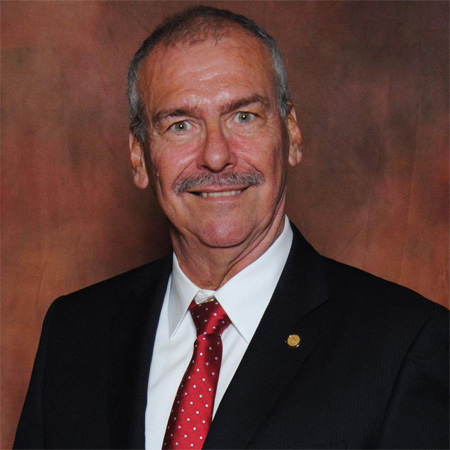
Long-time CJ Assistant Teaching Professor, Robert (Bob) Szejner passed away on Saturday, June 17th after a courageous battle with cancer. Several faculty and staff, including me, spoke to him during the last several weeks and, despite his health issues, Professor Szejner was his usual upbeat, warm, and optimistic self, always thinking positively and thinking of others. So, we were very shocked and devastated to learn that he passed away so soon after.
Professor Szejner had been a vital member of the criminal justice program since 2006. During that time, thousands of students took his classes including Intro to CJ, Police, and Serial Crimes. He was also very proud of the fact that he acted “as the course facilitator for over 60 independent research courses, and 5 Honors Thesis courses.” Perhaps one of the most distinctive and important roles that Professor Szejner played and hopefully one from which some of you have benefitted was faculty advisor. Over the years, Professor Szejner advised countless students who were interested in criminal justice careers, especially in law enforcement. Having worked for nearly 30 years as a police officer in Trenton (1974 to 2003, retiring as Lieutenant), Professor Szejner was well-positioned to give tips and assistance with launching and advancing policing careers. Although I was never privy to his conversations with students, I can imagine based on my personal experience that they frequently included a funny anecdote or story from his career, a kernel of wisdom, a reassuring and disarming smile, and a sense that you were the only person that mattered to him at that moment.
Professor Szejner was a devoted teacher and mentor, a team player, and a genuinely kind and decent man. Although he is gone and leaves a hole in our Program that cannot be filled, his impact on our faculty, staff, and students will endure. And if we pass along some of Professor Szejner’s sage advice or emulate his kindness, his impact can endure forever. Here is a link to his obituary.
Yours,
Paul Hirschfield
Director, Program in Criminal Justice
Welcome to our New Faculty!

The Program in Criminal Justice is proud to welcome three new faculty members to our team! Please click on each of their names to learn more about them.


Criminology Graduate Hired in Field of Forensics

Stephanie A. Rodriguez (Class of 2011), is a graduate of Rutgers College who majored in Biology and minored in Criminology. She was in the first group of Rutgers students who completed the first Forensics Science course offered through the Program in Criminal Justice in the fall of 2009. Stephanie also interned for Professor Mark Desire, Program in Criminal Justice, and was recently hired to work under Dr. Desire with the Department of Forensic Biology as part of the New York City Office of Chief Medical Examiner. She works as a criminalist and specializes in missing person identification.
Rutgers Newark Criminal Justice Professors Help Police Deploy Technology that Predicts Where Crime Will Likely Happen

A two-year $500,000 grant from the National Institute of Justice will enable criminal justice professors at Rutgers Newark to deploy “risk terrain modeling” technology—a technology that predicts where crime will likely happen—in six police agencies nationwide. Professors Leslie Kennedy, Joel Caplan, and Eric Piza will be using this technology to assist police agencies in Texas, Illinois, Colorado, Arizona, Missouri, and Newark, New Jersey. To read the full article published in Rutgers Today, click here.